Technetium
First predominantly artificial element, used in nuclear medicine.

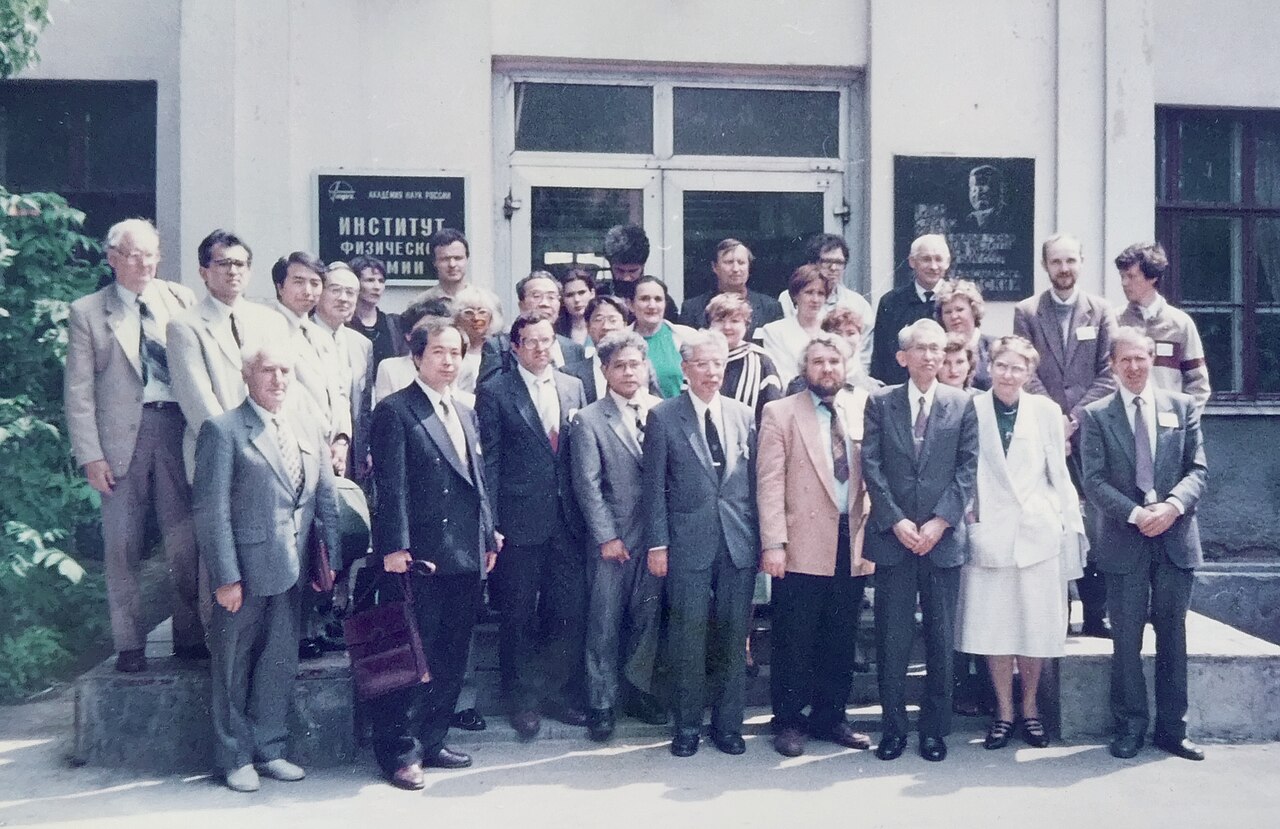
commons:User:Pumbaa (original work by commons:User:Greg Robson ) · CC BY-SA 2.0 uk
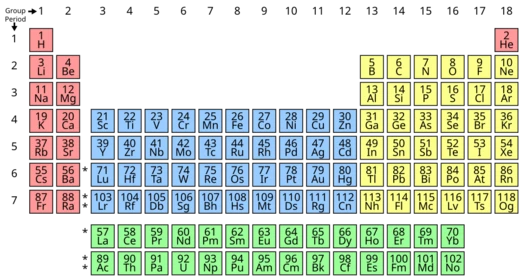
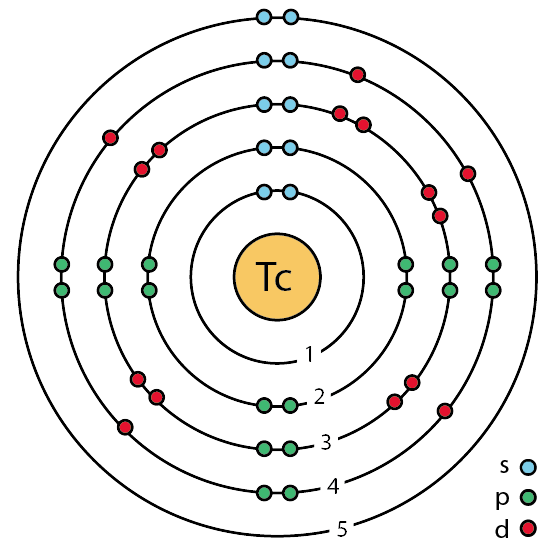
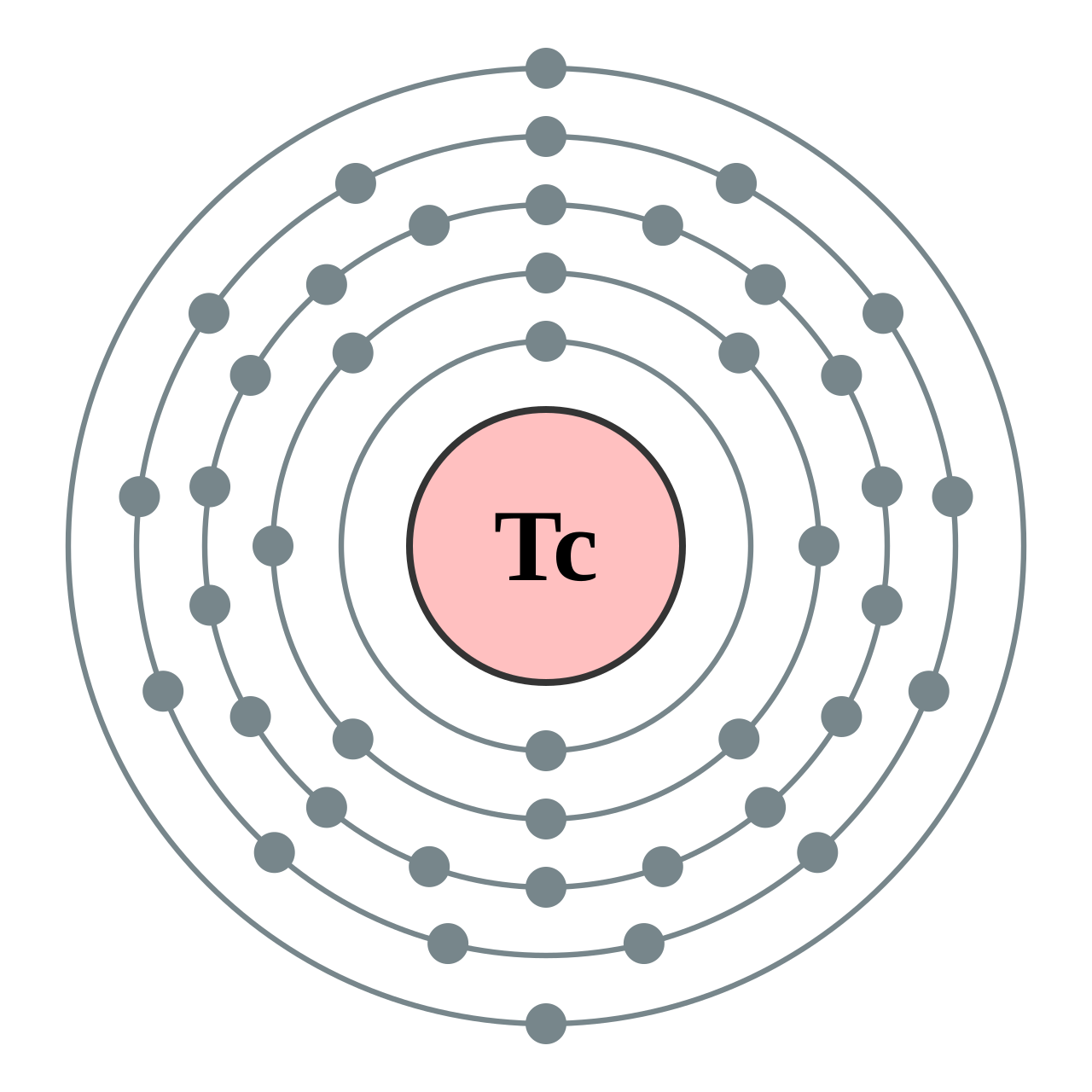
Technetium is a chemical element with symbol Tc and atomic number 43. It is the lightest element whose isotopes are all radioactive, and it is one of only two radioactive elements both preceded and succeeded in the periodic table by elements with stable forms. All available technetium is produced as a synthetic element, though it occurs naturally in trace amounts as a spontaneous fission product in uranium and thorium ores. Its discovery in 1937 marked the first predominantly artificial element to be produced, and it is widely used in nuclear medicine, particularly the isomer technetium-99m.
- symbol
- Tc
- atomic_number
- 43
- group
- 7
- period
- 5
- block
- d
- category
- transition metal
- discovery_year
- 1937
Lore & Background
Early attempts to discover it included a 1925 claim by German chemists Walter Noddack, Otto Berg, and Ida Tacke, who reported finding element 43 and named it masurium. Their results could not be replicated, and later analysis showed the amount of technetium in the ores they studied would have been undetectable by their methods. The element was officially discovered in 1937 by Carlo Perrier and Emilio Segrè at the University of Palermo. Segrè obtained a molybdenum foil from a cyclotron at the Lawrence Berkeley National Laboratory, and with Perrier they proved the presence of element 43 through comparative chemistry. The element was named technetium from the Greek word for 'artificial'. Merrill detected technetium's spectral signature in red giants, providing evidence that stars produce heavier elements through nucleosynthesis.
Reader's Guide
Technetium holds a unique place in both chemistry and astronomy. As the lightest element with no stable isotopes, it was the first element to be artificially produced, confirming the predictive power of the periodic table. Its discovery resolved a long-standing gap in Mendeleev's table and demonstrated that elements could be synthesized in the laboratory. In practical terms, the metastable isotope technetium-99m is used in tens of millions of medical diagnostic procedures annually, particularly for bone cancer diagnoses. The element's chemical properties, intermediate between manganese and rhenium, and its multiple oxidation states make it useful in catalysis and nuclear fuel processing, though its radioactivity poses challenges. The natural occurrence of technetium in uranium ores and the Oklo natural nuclear reactor further illustrate its role in both natural and artificial nuclear processes.
Did You Know?
- Technetium is the lightest element whose isotopes are all radioactive.
- It was the first predominantly artificial element to be produced, in 1937.
- The metastable isomer technetium-99m is used in nuclear medicine for tests such as bone cancer diagnoses.
The Long Hunt for Element 43
From the 1860s onward, Dmitri Mendeleev's periodic table contained a conspicuous gap between molybdenum (element 42) and ruthenium (element 44). In 1871 he predicted the missing element would sit directly below manganese and share its chemical character, dubbing it eka-manganese from the Sanskrit word for "one." That prediction made element 43 seem almost too easy to locate, and for decades chemists scrambled to claim the find. In 1925, German researchers Walter Noddack, Otto Berg, and Ida Tacke announced they had detected it in columbite by bombarding the ore with electrons and reading faint X-ray signals. They called it masurium, after the Masuria region of eastern Prussia—a name that inflamed the scientific community because it echoed German military victories over Russia in World War I. No one could reproduce their result, and later analysis by Paul Kuroda showed the quantity of element 43 in those ores could not have exceeded 3 × 10⁻¹¹ micrograms per kilogram, far below any detectable threshold. Radioactivity, ironically, was the very property that kept the element hidden from view for so long.
The Palermo Breakthrough
In mid-1936, Italian physicist Emilio Segrè traveled to the United States, visiting Columbia University and then the Lawrence Berkeley National Laboratory. There he convinced cyclotron pioneer Ernest Lawrence to hand over a piece of discarded molybdenum foil that had served as part of the machine's deflector and had become radioactive. Lawrence shipped the foil back to Sicily, where Segrè's colleague Carlo Perrier undertook a careful program of comparative chemistry to demonstrate that the activity belonged to an element with atomic number 43. Their 1937 work at the University of Palermo finally confirmed the long-sought element. Local university officials initially wanted to call it panormium, after the ancient Latin name for Palermo, but in 1947 the element received its lasting name, technetium, drawn from the Greek technetos meaning "artificial," a fitting tribute to its status as the first predominantly synthetic element ever produced. Back in Berkeley, Segrè later teamed up with Glenn T. Seaborg to isolate the metastable isotope technetium-99m, a collaboration that would reshape nuclear medicine.
From Reactor to Radiology Ward
Technetium's most celebrated role is in medicine. The short-lived nuclear isomer technetium-99m emits gamma rays and is employed across a broad spectrum of diagnostic tests, including the detection of bone cancer. Today it figures in roughly ten million medical imaging procedures every year. The ground-state isotope technetium-99, by contrast, serves as a gamma-ray-free source of beta particles. Commercially, the longer-lived isotopes are not manufactured from scratch but harvested as fission byproducts of uranium-235 in nuclear power reactors, then extracted from spent fuel rods. This practical pipeline exists because even the longest-lived technetium isotope decays with a half-life of only 4.21 million years, far too brief for the element to accumulate in any meaningful geological quantity. The silvery-gray crystalline metal itself sits between manganese and rhenium in group 7 of the periodic table, and its chemistry falls neatly between those two neighbors, a pattern Mendeleev had anticipated more than half a century before the element was first made in a laboratory.
Stellar Forges and Earthly Traces
In 1952, astronomer Paul W. Merrill spotted the spectral fingerprint of technetium—at wavelengths of 403.1, 423.8, 426.2, and 429.7 nanometers—in the light of S-type red giants. Those stars were nearing the end of their lives yet still glowed with a short-lived element, which could only mean nuclear reactions inside the star were actively forging it. That single observation became powerful evidence that heavy elements are born through nucleosynthesis in stars and later supported the model of neutron capture in the so-called s-process. On Earth, traces of technetium do appear, but only as the spontaneous fission product of uranium-238 or through neutron capture in molybdenum ores. In 1962, roughly 0.2 nanograms per kilogram of technetium-99 were isolated from pitchblende in the Belgian Congo. The natural nuclear fission reactor at Oklo also preserves evidence that significant quantities of technetium-99 were once generated and have since decayed into ruthenium-99. As the lightest element with exclusively radioactive isotopes—and one of only two such elements bracketed by stable neighbors—technetium remains a fascinating bridge between nuclear physics and the cosmos.
Gallery

Frequently Asked Questions
Who is Technetium?
Technetium is a transition metal carrying the symbol Tc and atomic number 43, located in group 7 and period 5 of the periodic table. It holds the distinction of being the lightest element for which every known isotope is radioactive.
What makes Technetium unique among its periodic-table neighbors?
It is one of only two elements that are fully radioactive yet sit directly between two elements that possess stable isotopes. This sandwiched-radioactivity setup makes it a rare anomaly in the lineup.
How was Technetium discovered?
It was first synthesized in a laboratory in 1937, earning it the title of the first predominantly artificial element ever produced. Trace natural amounts do exist as spontaneous fission products inside uranium and thorium ores, but all practical supply is man-made.
What is Technetium's main real-world role?
Its biggest application is in nuclear medicine, where the metastable isotope technetium-99m powers a huge share of diagnostic imaging scans. It is the most frequently used radioisotope in clinical medicine worldwide.
Why do element fans love Technetium?
It represents a gap that nature left open and humanity had to close through deliberate synthesis, making its origin story especially compelling. Its dual identity as both a natural trace fission product and a laboratory-born workhorse gives it a narrative arc that resonates in fan communities.
More in Chemical Elements 1-16
Spotted an error? Know more?
This is a living reference — every entry is fact-audited, and reader corrections feed straight into our audit queue. Suggest an edit · See this site's audit record