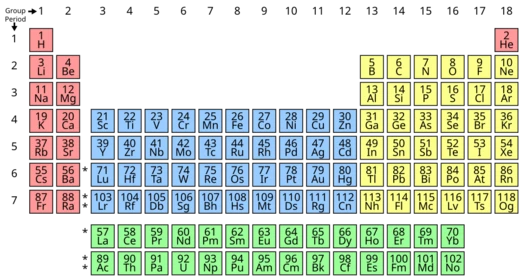
Thorium

ThaLibster · CC BY-SA 4.0
Thorium is a chemical element with symbol Th and atomic number 90. It is a weakly radioactive, light silver metal that tarnishes olive grey in air, forming thorium dioxide, and is moderately soft, malleable, and has a high melting point. Thorium is an electropositive actinide whose chemistry is dominated by the +4 oxidation state; it is quite reactive and can ignite in air when finely divided.
- symbol
- Th
- atomic_number
- 90
- discovered_by
- Jöns Jacob Berzelius
- most_stable_isotope
- 232Th
- half_life_of_most_stable_isotope
- 14.0 billion years
Lore & Background
Berzelius named it after Thor, the Norse god of thunder and war. Its first applications were developed in the late 19th century, and its radioactivity was widely acknowledged during the first decades of the 20th century. In the second half of the 20th century, thorium was replaced in many uses due to concerns about its radioactive properties. Thorium is still used as an alloying element in TIG welding electrodes but is slowly being replaced. It was also used in high-end optics and scientific instrumentation, some broadcast vacuum tubes, and as the light source in gas mantles, though these uses have become marginal. It has been suggested as a replacement for uranium as nuclear fuel in nuclear reactors, and several thorium reactors have been built. Other uses include strengthening magnesium, coating tungsten wire, controlling grain size of tungsten in electric lamps, high-temperature crucibles, and glasses including camera and scientific instrument lenses.
Reader's Guide
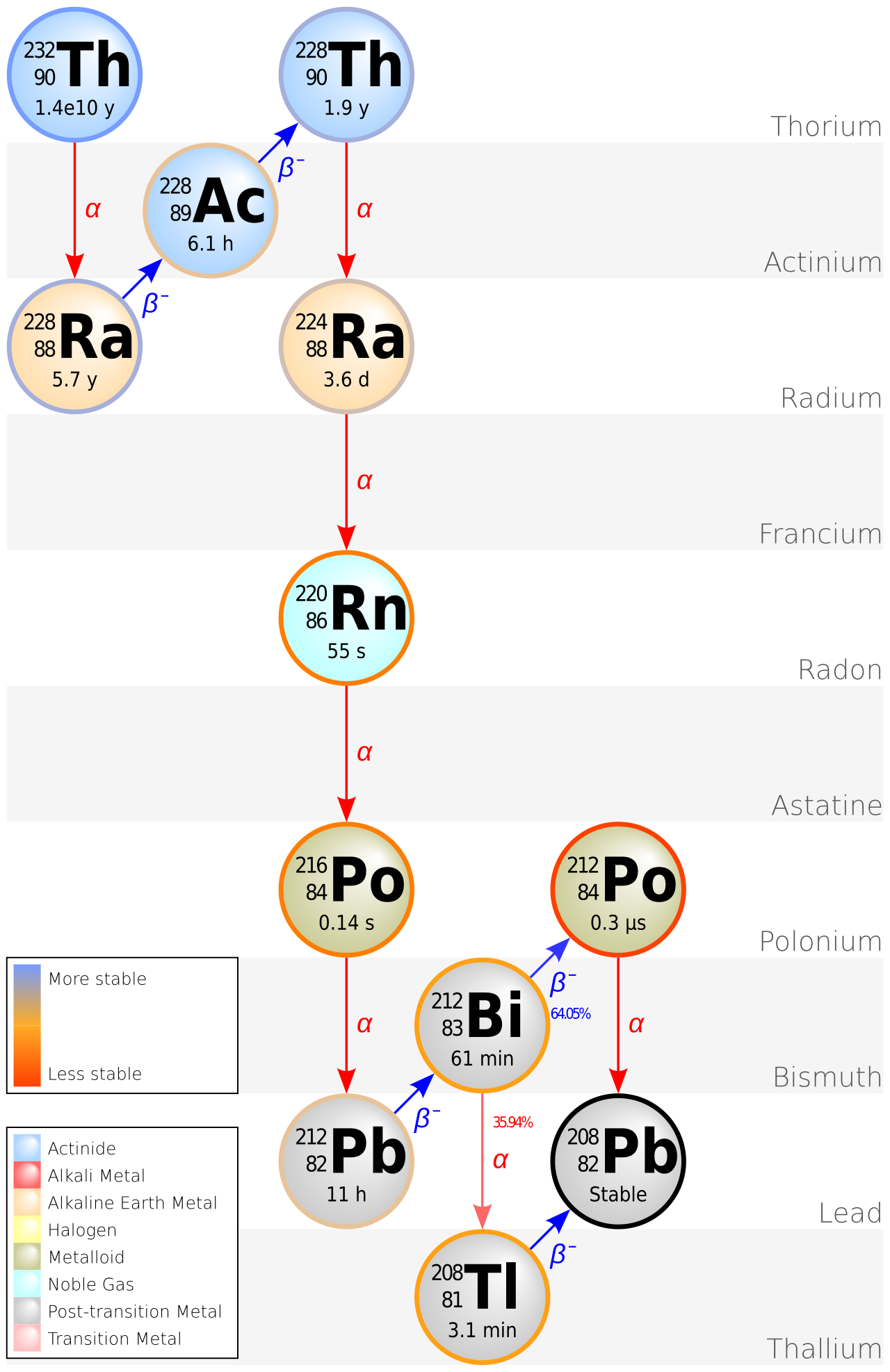
Thorium is significant as a primordial radioactive element that occurs naturally in large quantities, estimated to be over three times as abundant as uranium in the Earth's crust. Its most stable isotope, 232Th, has a half-life of 14.0 billion years, about the age of the universe, and decays via alpha decay through the thorium series to stable 208Pb. Thorium is chiefly refined from monazite sands as a by-product of extracting rare-earth elements. Its properties vary widely depending on impurities, with thorium dioxide being the major impurity. The element has been used in various industrial applications, though many have declined due to radioactivity concerns. Its potential as a nuclear fuel has led to the construction of several thorium reactors. In ocean science, 231Pa/230Th isotope ratios are used to understand the ancient ocean.
Did You Know?
- Thorium is named after Thor, the Norse god of thunder and war.
- The most stable isotope, 232Th, has a half-life of 14.0 billion years, about the age of the universe.
- Thorium is estimated to be over three times as abundant as uranium in the Earth's crust.
Discovery & the Norse Connection
In 1828, the Swedish chemist Jöns Jacob Berzelius identified a new element while examining a previously unknown mineral that had been collected by Morten Thrane Esmark on Løvøya island, a small landmass near Brevik in Norway's Langesund fjord. Berzelius chose to honour the Norse pantheon by naming the element after Thor, the god of thunder and war, a nod that reflected both the Scandinavian origin of the discovery and the dramatic, elemental character of the metal. The element's practical utility did not emerge immediately; its first applications were not developed until the closing decades of the nineteenth century. By the early twentieth century, however, the scientific community had come to widely recognise thorium's radioactivity, a property that would ultimately reshape its role in industry. During the latter half of the twentieth century, growing apprehension about the hazards posed by its radioactive nature led to its displacement in numerous applications that it had previously served.
Physical Character & Metallurgical Behaviour
Thorium presents as a moderately soft, bright silvery metal with a paramagnetic character, and it can be bent, shaped, cold-rolled, swaged, and drawn into wire with relative ease. At room temperature its atoms arrange in a face-centred cubic lattice, but above 1360 °C the structure shifts to body-centred cubic, and under extreme pressures near 100 GPa a body-centred tetragonal form appears. Its bulk modulus of 54 GPa places its compressive resistance close to that of tin, and its hardness is comparable to soft steel, meaning it can be rolled into sheets when heated. Among the actinides that can be studied in milligram quantities, thorium holds the highest melting point at 1750 °C and the fifth-highest boiling point of any element at 4788 °C, while its density of roughly 11.5 to 11.66 g/cm³ makes it nearly half as dense as uranium or plutonium yet harder than both. Below 1.4 K the metal becomes superconductive. Thorium also forms eutectic mixtures with chromium and uranium and is completely miscible with cerium in both solid and liquid states, underscoring its versatility in alloy design.
Radioactive Identity & Natural Abundance
Every isotope of thorium is unstable, yet the element persists in the Earth's crust in substantial quantities because its dominant isotope, 232Th, carries a half-life of fourteen billion years—roughly the age of the universe itself. This remarkable longevity is attributed to a closed nuclear subshell containing 142 neutrons. The slow alpha decay of 232Th initiates a decay chain known as the thorium series, which terminates at the stable isotope 208Pb. Thorium and uranium stand apart as the only elements lacking any stable or nearly stable isotope that still occur naturally in large primordial quantities. In the Earth's crust, thorium is estimated to be more than three times as abundant as uranium, and it is principally recovered from monazite sands as a by-product of rare-earth element extraction. Seven naturally occurring isotopes are known, but 232Th is the only one present in meaningful quantity, giving thorium a characteristic terrestrial atomic weight of 232.0377.
Industrial Applications & the Nuclear Fuel Question
Thorium's industrial footprint spans a wide range of technologies. It serves as an alloying element in TIG welding electrodes, though alternative compositions are gradually displacing it. Historically it featured in high-end optical lenses for cameras and scientific instruments, broadcast vacuum tubes, and gas mantles that provided a bright light source. In metallurgy, small additions of thorium strengthen magnesium, coat tungsten wire in electrical and welding equipment, and control grain size in tungsten used for electric lamps. High-temperature crucibles, heat-resistant ceramics, and aircraft engine components also benefit from its properties. Perhaps the most discussed modern application is thorium's potential as a nuclear reactor fuel to replace uranium; several thorium-based reactors have already been constructed, and thorium–aluminium alloys have been explored as a storage medium for such fuel cycles. In the realm of ocean science, the isotope ratio of 231Pa to 230Th has become a valuable tool for reconstructing ancient ocean chemistry.
Gallery

Frequently Asked Questions
Who is Thorium?
Thorium is a weakly radioactive actinide metal carrying the symbol Th and atomic number 90, first identified by Jöns Jacob Berzelius. It occupies an early slot in the actinide series and is recognized for its light silver luster before exposure to air.
What are Thorium's powers and role?
Thorium's chemistry is anchored almost entirely in a +4 oxidation state, making it strongly electropositive and quite reactive. It boasts a high melting point and is moderately soft and malleable, though in finely divided form it can ignite spontaneously in air.
How does Thorium's story end?
Thorium's most stable isotope, 232Th, carries a half-life of roughly 14 billion years, so its radioactive decay is extraordinarily slow. In practical terms, a sample of Thorium persists for geological timescales before appreciable transformation occurs.
Why is Thorium important to the element community?
As a long-lived, weakly radioactive actinide, Thorium plays a central role in nuclear research and in dating ancient rocks and minerals. Its distinctive +4 chemistry and high reactivity set it apart from the lighter actinides around it.
What does Thorium look like in its natural state?
Thorium presents as a light silver metal that slowly develops an olive-grey patina when it meets air, a process driven by the formation of thorium dioxide on its surface. In bulk it is moderately soft and malleable rather than brittle.
More in Chemical Elements 1-16
Spotted an error? Know more?
This is a living reference — every entry is fact-audited, and reader corrections feed straight into our audit queue. Suggest an edit · See this site's audit record