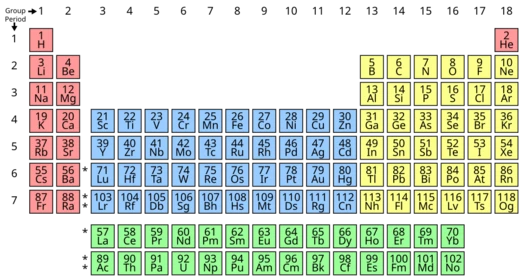
Thulium
A rare lanthanide metal used in lasers and X-ray sources.

Leiem · CC BY-SA 4.0
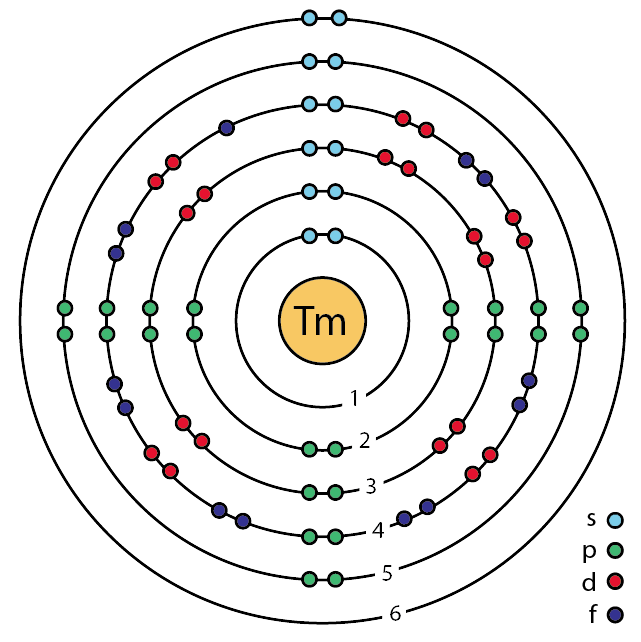
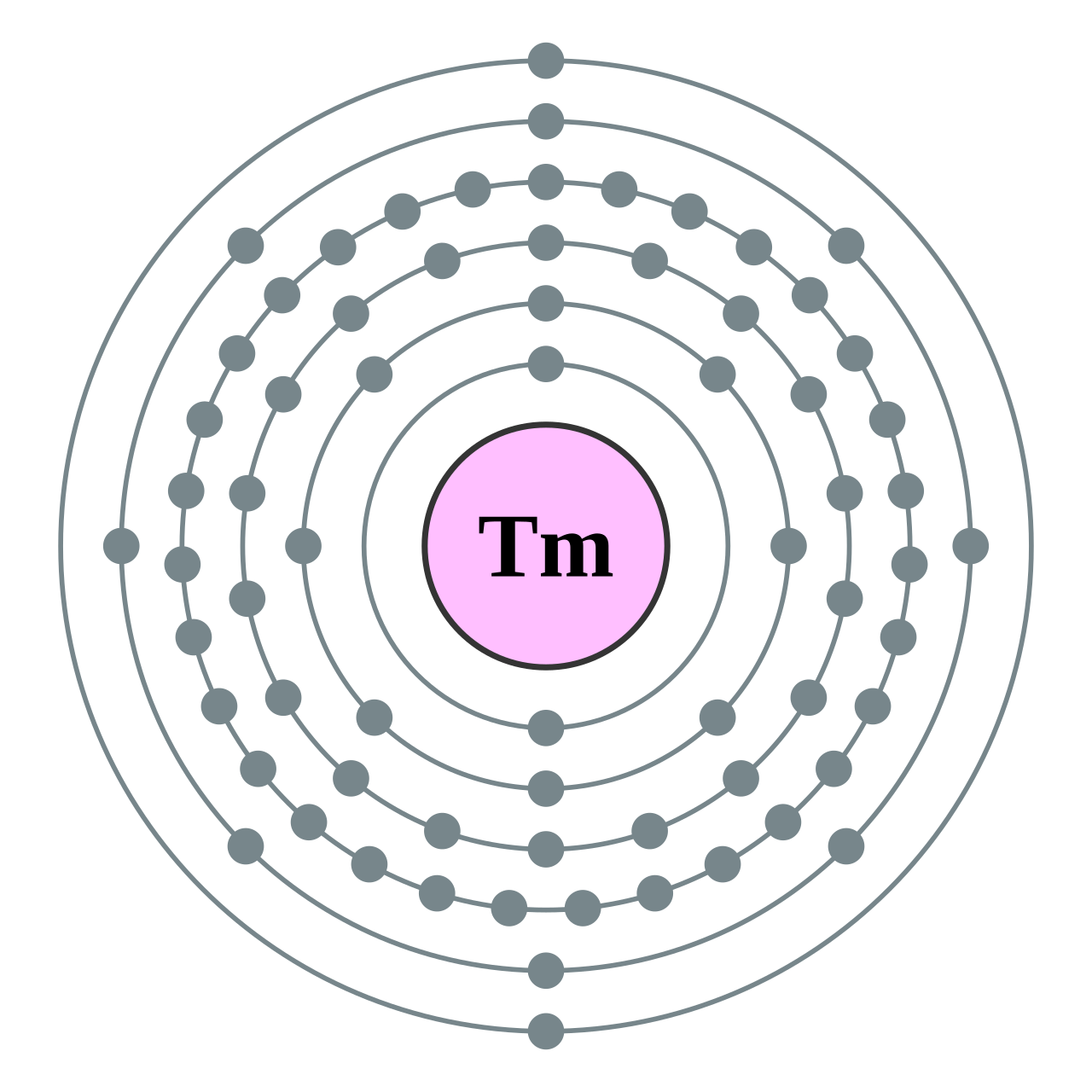
Thulium is a chemical element with the symbol Tm and atomic number 69. It is the thirteenth element in the lanthanide series of metals and the second-least abundant lanthanide in the Earth's crust, after radioactively unstable promethium. It is an easily workable metal with a bright silvery-gray luster, fairly soft, and slowly tarnishes in air. Despite its high price and rarity, thulium is used as a dopant in solid-state lasers and artificial radioactive isotopes of thulium are used as radiation sources in some portable X-ray devices.
- symbol
- Tm
- atomic_number
- 69
- discovered_by
- Per Teodor Cleve
- series
- Lanthanide
- abundance_in_crust
- 0.5 mg/kg
- common_oxidation_state
- +3
Lore & Background
These were the oxides of holmium and thulium, respectively. Cleve's sample of thulium oxide contained impurities of ytterbium oxide.
Reader's Guide
Thulium is significant as the second-least abundant stable lanthanide, with a key role in specialized technologies. Its primary modern applications are as a dopant in solid-state lasers, particularly in holmium-chromium-thulium triple-doped YAG lasers used in military, medical, and meteorological fields, and in single-element thulium-doped YAG lasers operating at 2010 nm. Thulium-based lasers are efficient for superficial tissue ablation with minimal coagulation depth, making them attractive for laser-based surgery. Additionally, artificial radioactive isotopes of thulium serve as radiation sources in portable X-ray devices. The element has no significant biological role and is not particularly toxic. Its high price and rarity have limited widespread use, but advances in ion-exchange and solvent-extraction techniques have lowered production costs. Thulium's discovery history illustrates the painstaking work of early rare-earth chemists, and its continued study contributes to materials science and medical technology.
Did You Know?
- Thulium is the second-least abundant lanthanide in the Earth's crust, after radioactively unstable promethium.
- Thulium is ferromagnetic below 32 K, antiferromagnetic between 32 and 56 K, and paramagnetic above 56 K.
- Thulium's atomic symbol was initially Tu, but later changed to Tm to avoid confusion with tungsten.
From Thule to the Metal: A Long Road to Isolation
In 1879, Swedish chemist Per Teodor Cleve was sifting through the rare-earth mineral erbia, stripping away every known contaminant until two unfamiliar oxides remained. The brown one he named holmia; the green one, thulia, after the Ancient Greek place name Thule, a term loosely tied to Scandinavia or Iceland. The element behind that green oxide was christened thulium. Cleve's original sample, however, was contaminated with ytterbium oxide, and the element's true color remained hidden for decades. It was not until 1911 that Charles James, working at New Hampshire College in Durham, managed to produce a nearly pure sample of thulium oxide. His method—bromate fractional crystallization—required a staggering fifteen thousand individual purification steps before he could confirm the material was homogeneous. The metallic form itself eluded chemists for even longer, finally isolated in 1936 by Wilhelm Klemm and Heinrich Bommer. The element's symbol was originally written as Tu, but was later revised to Tm to prevent confusion with tungsten, which carried the same abbreviation at the time.
A Soft, Silvery Metal with Surprising Reactions
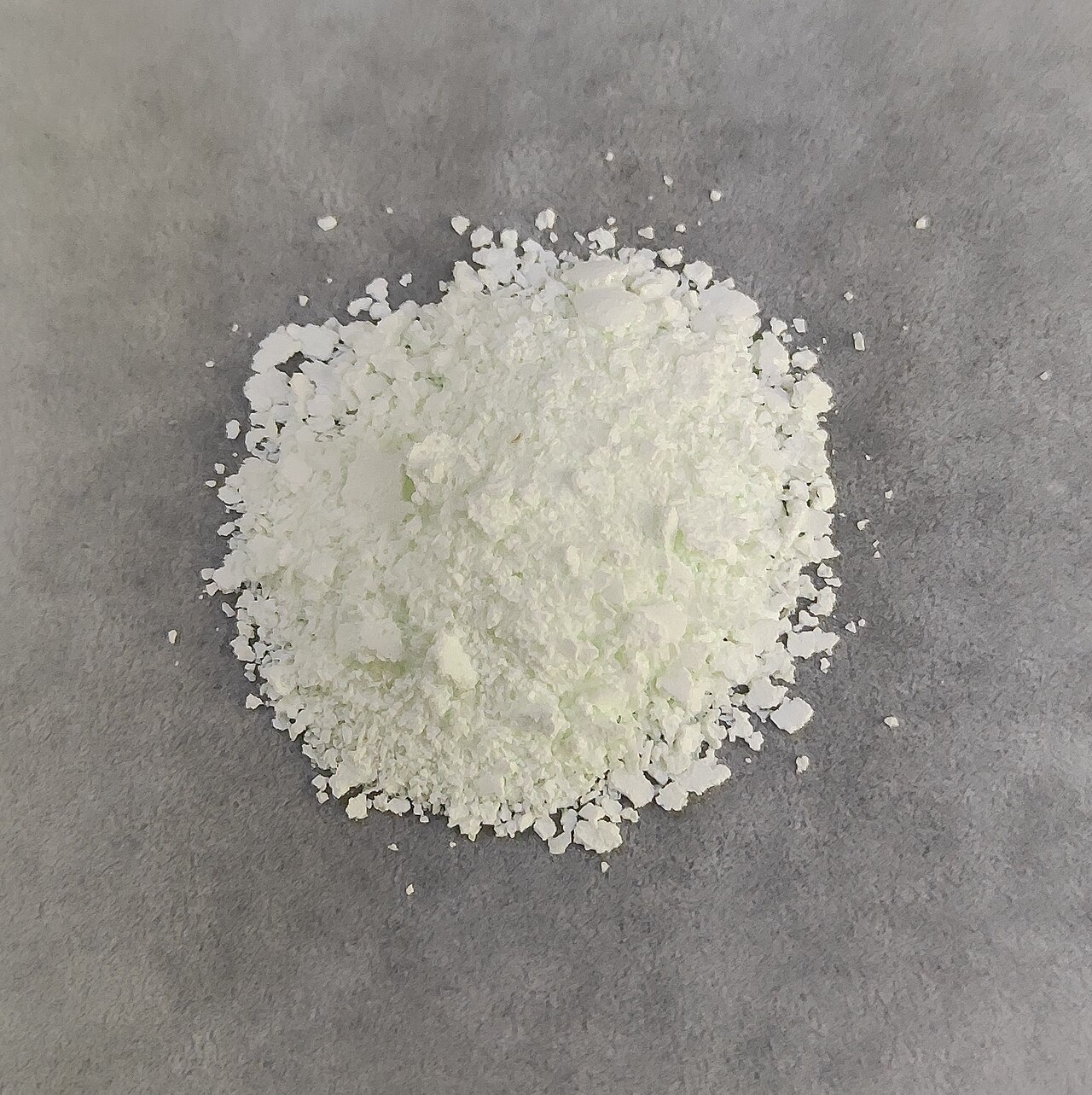
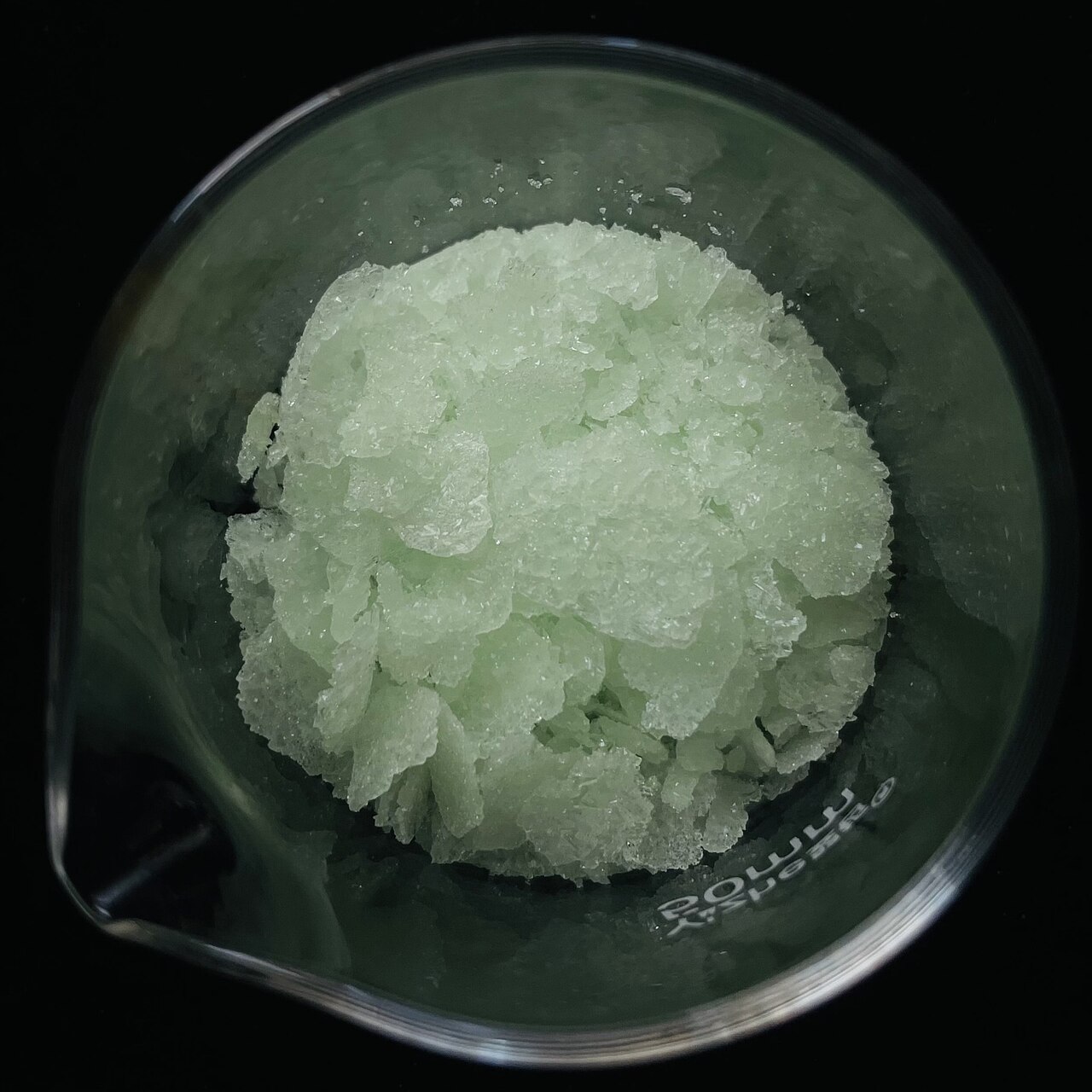
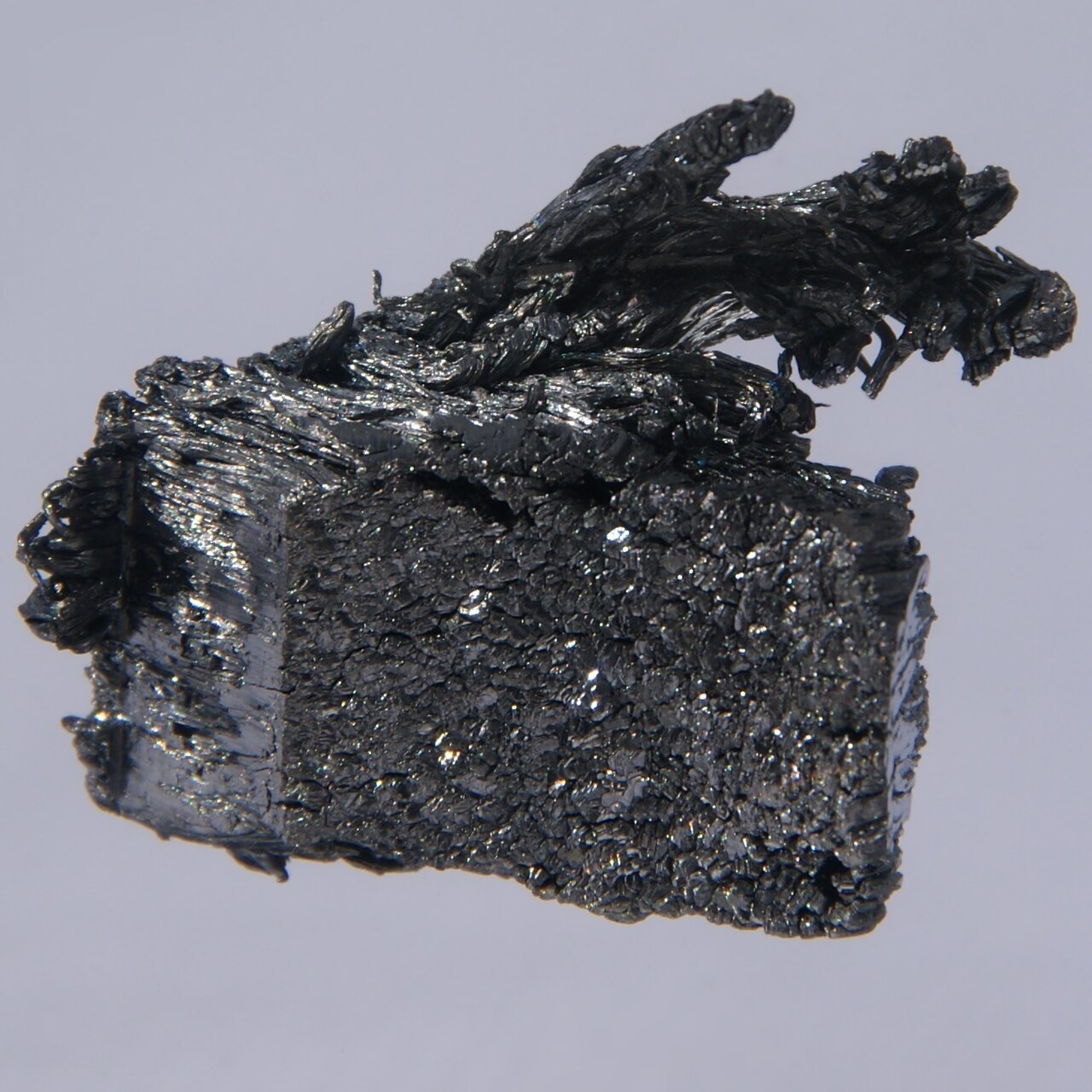
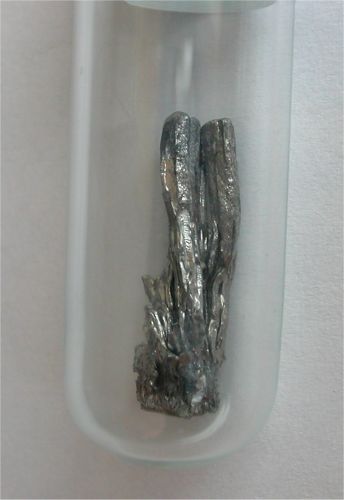
Thulium presents as a bright, silvery-gray metal that is soft enough to be sliced with a knife, registering a Mohs hardness of only two to three. Despite its delicate appearance, the element is both malleable and ductile, making it relatively easy to work with in the laboratory. Its magnetic behavior shifts with temperature: below 32 kelvin it is ferromagnetic, between 32 and 56 kelvin it becomes antiferromagnetic, and above 56 kelvin it turns paramagnetic. Two allotropes are recognized—the tetragonal α-form and the more stable hexagonal β-form. Chemically, thulium tarnishes slowly when exposed to air and will ignite at roughly 150 °C, producing thulium(III) oxide. Finely divided thulium dust poses a genuine explosion and fire hazard. The metal reacts with cold water at a sluggish pace and far more briskly with hot water, releasing hydrogen gas and forming thulium hydroxide. All four halogens react with thulium, slowly at room temperature but vigorously above 200 °C, yielding colored halide salts. In dilute sulfuric acid, thulium dissolves to give pale green Tm³⁺ ions, each coordinated to nine water molecules, and these ions display a striking blue luminescence.
Rarity, Price, and the Quest for Purity
Among the lanthanide family, thulium ranks as the second-least abundant member in Earth's crust, surpassed in scarcity only by the radioactively unstable promethium. The element is never encountered in its free, metallic state in nature, and extracting it in usable quantities has always demanded considerable effort. For much of the nineteenth and early twentieth centuries, researchers could only confirm thulium's presence spectroscopically, watching characteristic absorption bands strengthen as erbium was progressively stripped away. The first commercially available high-purity thulium oxide appeared in the late 1950s, made possible by the adoption of ion-exchange separation technology. The Lindsay Chemical Division of American Potash & Chemical Corporation marketed the oxide in 99 percent and 99.9 percent purity grades. Over the period from 1959 to 1998, the price per kilogram of the 99.9 percent grade fluctuated between roughly 4,600 and 13,300 US dollars, making thulium the second most expensive lanthanide behind only lutetium. This combination of extreme scarcity and high cost has kept thulium firmly in the realm of specialized laboratory and industrial applications rather than everyday use.
Practical Uses and a Benign Biological Profile
Despite its rarity and high cost, thulium has found meaningful roles in modern technology. Perhaps its most notable application is as a dopant in solid-state lasers, where its electronic structure contributes useful optical properties. In the medical and industrial imaging field, artificially produced radioactive isotopes of thulium serve as radiation sources in certain portable X-ray devices, offering a compact alternative to larger equipment. On the biological front, thulium is essentially inert to living organisms: it plays no known physiological role and is not considered particularly toxic, which simplifies handling in laboratory settings. Natural thulium consists of a single observationally stable isotope, thulium-169, though it is predicted to undergo alpha decay to holmium-165 over an extraordinarily long half-life. The known isotopic range spans from thulium-144 to thulium-183. Before the stable isotope, the dominant decay pathway is electron capture toward erbium isotopes; after it, beta emission leads to ytterbium isotopes. The longest-lived radioactive variants are thulium-171, with a half-life of 1.92 years, and thulium-170 at 128.6 days, while most other isotopes decay within ten minutes.
Gallery
Frequently Asked Questions
Who is Thulium?
Thulium is a silvery-gray lanthanide metal occupying position 69 on the periodic table under the symbol Tm. It is the second-rarest member of the rare-earth family in Earth's crust, trailing only the unstable isotope promethium.
What are Thulium's powers or role?
Its standout practical job is acting as a dopant inside solid-state lasers to generate specific light wavelengths. Artificial radioactive isotopes of the element also serve as compact radiation sources in portable X-ray units.
How was Thulium discovered?
Swedish chemist Per Teodor Cleve is credited with identifying the element during the broader 19th-century effort to isolate and characterize the lanthanide series.
Why is Thulium important despite being so rare?
At roughly half a milligram per kilogram of crust and carrying a high market price, it still fills a niche in laser technology and compact X-ray generation that other elements do not match. Its standard +3 oxidation state gives it reliable chemical behavior within the lanthanide group.
What does Thulium look like and how does it behave in air?
It is a fairly soft, easily worked metal with a bright silvery-gray sheen. Left exposed, it slowly develops a dull tarnish on its surface rather than corroding rapidly.
More in Chemical Elements 1-16
Spotted an error? Know more?
This is a living reference — every entry is fact-audited, and reader corrections feed straight into our audit queue. Suggest an edit · See this site's audit record