Tin
A soft, malleable metal with a distinctive tin cry.

Farmers' Trading Company · CC BY 4.0
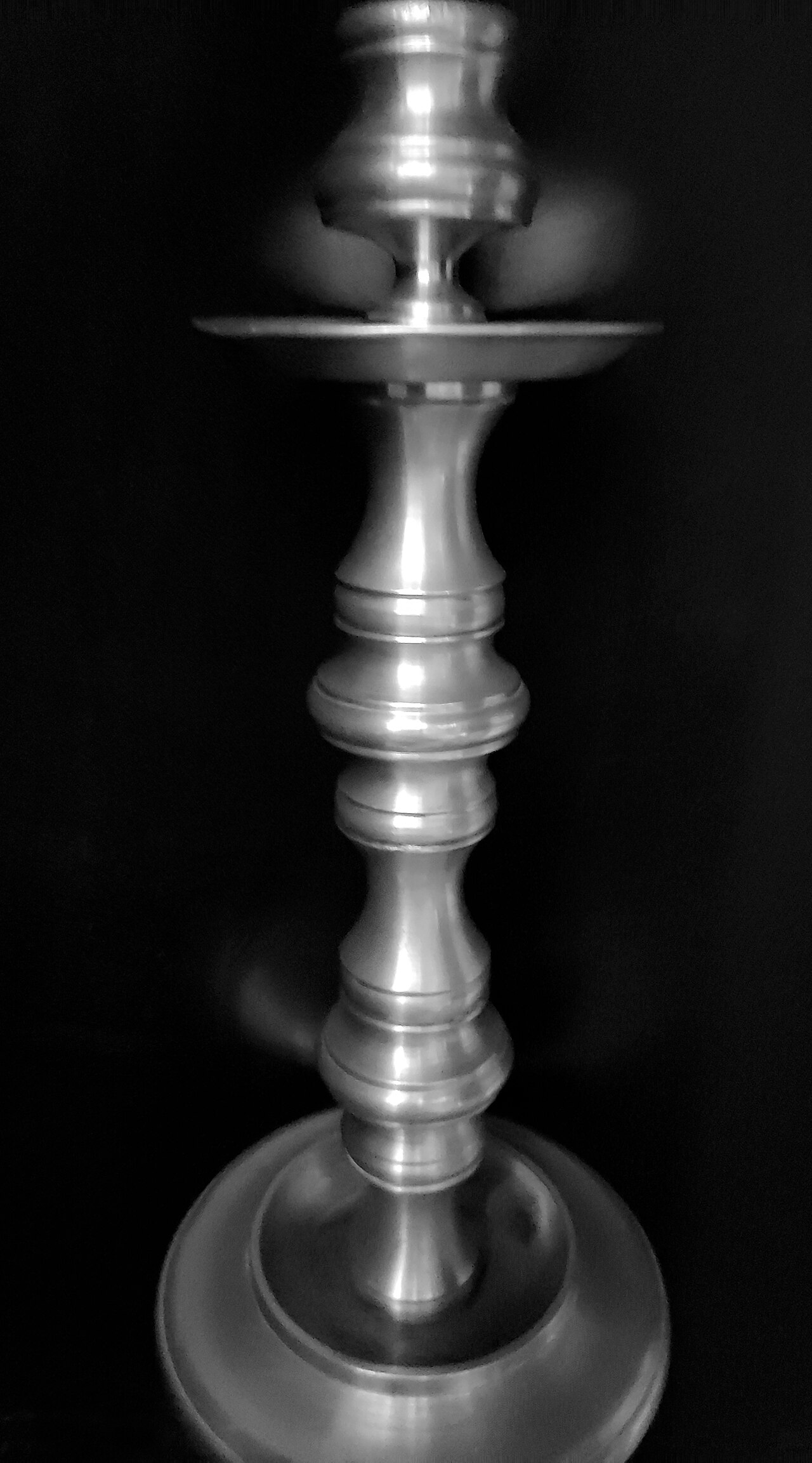
Tin is a chemical element with the symbol Sn (from Latin stannum) and atomic number 50. It is a post-transition metal in group 14 of the periodic table, obtained chiefly from the mineral cassiterite (stannic oxide, SnO2). With 10 stable isotopes, it has the largest number of stable isotopes of any element, attributed to its magic number of protons (50). Tin is notable for its two main allotropes: β-tin (white tin), a silvery-white, malleable metal stable at room temperature, and α-tin (gray tin), a brittle, nonmetallic form stable below 13.2 °C. Tin is used in many alloys, including pewter and tin-lead soft solders, as well as in corrosion-resistant tin plating of steel for food packaging (tin cans) and in transparent, electrically conducting films of indium tin oxide for optoelectronic applications.
- Symbol
- Sn
- Atomic Number
- 50
- Group
- 14 (post-transition metal)
- Stable Isotopes
- 10 (the most of any element)
Lore & Background
Tin is a soft, malleable, ductile, and highly crystalline silvery-white metal. When a bar of tin is bent, a crackling sound known as the 'tin cry' can be heard, resulting from twinning in tin crystals. This trait is shared by indium, cadmium, zinc, and mercury in its solid state. β-tin, stable at and above room temperature, has a body-centered tetragonal crystal structure, while α-tin, stable below 13.2 °C, has a diamond cubic structure and is a dull-gray powdery material with no common uses other than specialized semiconductor applications. In cold conditions, β-tin tends to transform spontaneously into α-tin, a phenomenon known as 'tin pest' or 'tin disease'. The α-β transformation temperature is 13.2 °C, but impurities lower it well below 0 °C, and adding antimony or bismuth may prevent the transformation entirely. Commercial grades of tin (99.8% tin content) resist transformation due to inhibiting impurities. Tin becomes a superconductor below 3.72 K and was one of the first superconductors to be studied; the Meissner effect was first discovered in superconducting tin crystals.
Reader's Guide
Its low toxicity makes tin-plated steel widely used for food packaging as 'tin cans'. Tin is also used in many alloys, including pewter (85–90% tin) and tin-lead soft solders (typically 60% or more tin), and in optoelectronic applications as indium tin oxide films. Tin's chemical resistance to corrosion from water, combined with its ability to be highly polished, makes it useful as a protective coating for other metals. The element has the largest number of stable isotopes of any element (10), a property linked to its magic number of protons (50). Tin is one of the easiest elements to detect and analyze by NMR spectroscopy, with chemical shifts referenced against tetramethyltin.
Did You Know?
- Tin has 10 stable isotopes, the largest number of any element, due to its magic number of protons (50).
- When a bar of tin is bent, it produces a crackling sound called the 'tin cry' from twinning in its crystals.
- Tin becomes a superconductor below 3.72 K, and the Meissner effect was first discovered in superconducting tin crystals.
Identity Among the 118
Tin is one of 118 chemical elements that have been formally identified and given official names by IUPAC. At its most fundamental level, Tin is defined by a fixed proton count in its atomic nucleus—what chemists refer to as its atomic number, or Z. This specific number of protons is what distinguishes Tin from every other element in existence. The very concept of a chemical element, sometimes shortened to simply "an element," rests on this principle: a distinct type of atom characterized by a particular nuclear proton count. Tin, like all 118 elements, occupies a unique position in the chemical landscape precisely because of this defining property. The formal naming and identification process conducted by IUPAC ensures that Tin's identity is recognized consistently across the global scientific community, providing a shared, unambiguous vocabulary for researchers in every country and laboratory.
Position in the Periodic Framework
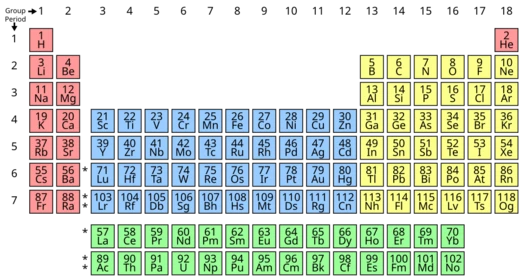
The periodic table of the elements stands as the definitive visual representation of all 118 elements, and Tin holds its designated place within this foundational structure. The table arranges elements in a tabular format based on their chemical properties, typically employing abbreviated chemical symbols rather than full names. Tin's position within this grid reflects its chemical behavior and its relationships to neighboring elements. The history of the periodic table and the principles of the periodic law represent one of the founding developments of modern chemistry, and Tin's placement within it is a testament to that organizational achievement. While the tabular format is the most widely recognized presentation, a linear list organized by proton count offers an equally valid way to locate Tin among its elemental peers. Both formats serve to make the relationships between elements—Tin included—accessible and comprehensible to students and professionals alike.
Properties and Comparative Organization
Beyond its position in the periodic table, Tin can be understood through multiple organizational lenses. While the standard arrangement groups elements by chemical properties, Tin can also be situated relative to other elements by properties such as atomic weight, density, and electronegativity. These alternative sorting methods reveal different facets of how Tin compares to its 117 elemental siblings. The fact that elements can be organized in several distinct ways—by proton count, by weight, by density, by electrical character—demonstrates the richness of chemical classification. Tin's specific values in each of these categories place it at a particular point along each spectrum, allowing chemists to draw meaningful comparisons. Whether examining Tin's density relative to its neighbors or its electronegativity in the context of bonding behavior, these properties provide the quantitative backbone for understanding how Tin behaves within chemical systems.
Naming, Etymology, and Broader Context
Like all 118 officially recognized elements, Tin carries a name that has been formally established through IUPAC's naming conventions. The origins of element names—what scholars call etymology—form a rich area of study in their own right, with some elements named after people, others after places, and still others drawing from older linguistic roots. Tin's name, like those of its fellow elements, carries a historical and linguistic story that connects modern chemistry to centuries of human observation and language. The broader context of element naming also includes the extended periodic table, which envisions eight or more periods and thus a framework far beyond the 118 currently identified elements. In this expansive view, Tin's name and identity sit within a much larger narrative of chemical discovery, one that continues to evolve as scientists probe the boundaries of what atoms can be.
Gallery

Frequently Asked Questions
Who is Tin?
Tin (Sn) is a soft, silvery-white post-transition metal at atomic number 50 in group 14, named from the Latin stannum. It is most commonly extracted from the ore cassiterite (stannic oxide, SnO₂).
What are Tin's powers and signature abilities?
Tin's headline trait is its dual allotropic identity: β-tin (white tin), the malleable silvery metal stable at room temperature, and α-tin (gray tin), a brittle nonmetallic phase that appears below 13.2 °C. It also produces a distinctive high-pitched "tin cry" when bent, making it instantly recognizable to fans.
How does Tin's story end?
Below 13.2 °C, white tin undergoes its famous "transformation arc," slowly crumbling into powdery gray α-tin in a process known as tin pest. This allotropic shift is the element's most dramatic and well-known plot twist.
Why is Tin important to the wider elemental community?
Tin holds the all-time record for the most stable isotopes of any element—ten in total—owing to its proton count of 50 being a nuclear magic number. Its corrosion resistance and low melting point also make it a go-to ingredient in solder, pewter, and food-can coatings.
Why is Tin's symbol Sn instead of Tn?
The abbreviation Sn comes directly from the Latin name stannum, a convention inherited from early alchemical and chemical nomenclature. Fans often trip over the mismatch between the English name and the two-letter symbol, but it follows the same pattern as iron (Fe) or copper (Cu).
More in Chemical Elements 1-16
Spotted an error? Know more?
This is a living reference — every entry is fact-audited, and reader corrections feed straight into our audit queue. Suggest an edit · See this site's audit record