Thallium
A toxic metal discovered via its green spectral line.

Speedpera · CC BY 4.0
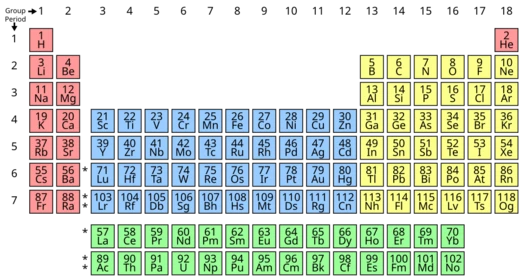
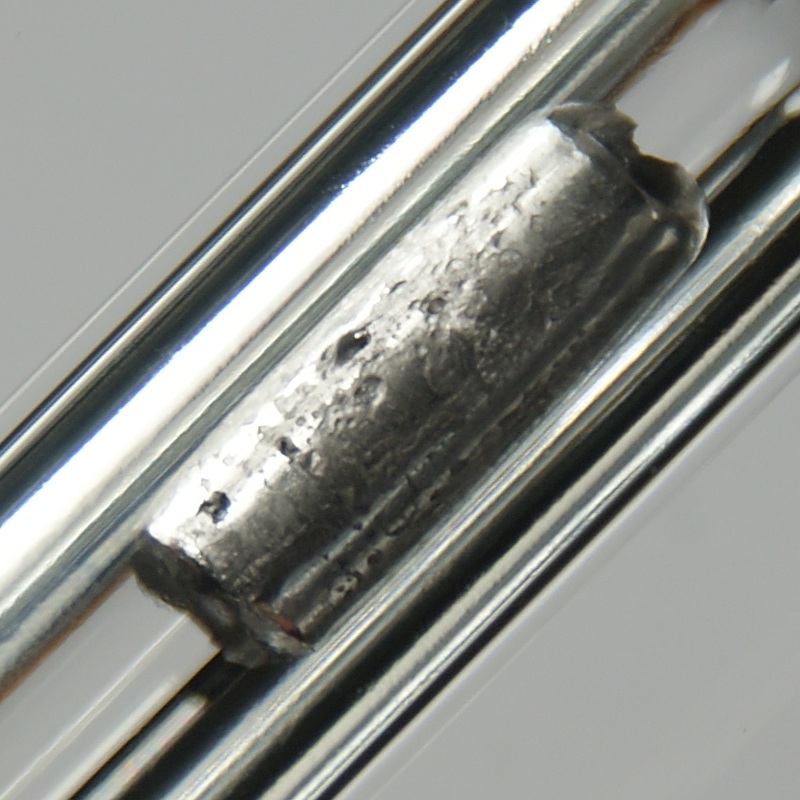
Thallium is a chemical element with symbol Tl and atomic number 81. It is a silvery-white post-transition metal that is not found free in nature, and when isolated, it resembles tin but discolors when exposed to air. Thallium is highly toxic and historically used in rat poisons and insecticides, gaining notoriety as 'the poisoner's poison.'
- symbol
- Tl
- atomic_number
- 81
- discoverers
- William Crookes and Claude-Auguste Lamy
- category
- post-transition metal
- key_property
- green spectral line in flame spectroscopy
Lore & Background
The element was named by Crookes from the Greek θαλλός (thallós), meaning 'green shoot' or 'twig,' due to its bright green spectral emission lines. Crookes exhibited it as a powder precipitated by zinc at the International Exhibition, which opened on 1 May that year.
Reader's Guide
Thallium's significance lies in its dual nature as both a useful industrial element and a notorious poison. Commercially, it is primarily a byproduct of heavy-metal sulfide ore refining, with about 65% used in electronics, and the remainder in pharmaceuticals and glass manufacturing, including infrared detectors. The radioisotope thallium-201, as soluble chloride, is used in nuclear medicine for cardiac stress tests, emitting X-rays and gamma rays suitable for imaging with low patient radiation dose. However, thallium's toxicity has overshadowed its benefits; its soluble salts, nearly tasteless, were historically used in rat poisons and insecticides, but due to nonselective toxicity, their use has been restricted or banned in many countries. Thallium poisoning typically results in hair loss, and its historic popularity as a murder weapon earned it the nicknames 'the poisoner's poison' and 'inheritance powder.' The element's chemistry also illustrates the inert pair effect, with the +1 oxidation state being more stable than +3, a trend unique among group 13 elements.
Did You Know?
- The name thallium comes from the Greek word for 'green shoot' or 'twig,' due to its bright green spectral line.
- Thallium-201 is used in nuclear medicine for cardiac stress tests, decaying by electron capture and emitting X-rays and gamma rays.
- Soluble thallium salts are nearly tasteless and highly toxic, historically used as rat poison and earning the nickname 'inheritance powder.'
Discovery and the Green Flame
In 1861, two chemists working independently stumbled upon a new element hidden in the waste residues of sulfuric acid manufacturing. William Crookes and Claude-Auguste Lamy each employed the newly developed technique of flame spectroscopy, and both were struck by a vivid green spectral line that no known element could account for. Crookes, drawing on Greek, christened the newcomer thallium from θαλλός (thallós), a word meaning "green shoot" or "twig"—a fitting nod to the emerald glow that first revealed it. The following year, 1862, saw both men isolate the metal by different routes: Lamy turned to electrolysis, while Crookes precipitated and melted a fine powder. Crookes even showcased his zinc-precipitated thallium powder at the International Exhibition that opened on 1 May 1862, giving the public its first glimpse of the silvery-white post-transition metal that would later earn a far darker reputation.
The Inert Pair and a Dual Personality
Thallium's electron configuration, [Xe]4f145d106s26p1, gives it three valence electrons in the sixth shell, yet a quantum quirk called the inert pair effect keeps the 6s pair relativistically stabilised and resistant to bonding. Because those two electrons are reluctant participants, thallium behaves less like a typical group 13 member and more like its soft, low-melting neighbors mercury and lead. This quirk produces a striking chemical duality: the +3 oxidation state mirrors the chemistry of boron, aluminium, gallium, and indium, while the +1 state—far more prominent in thallium than in any lighter group 13 element—echoes the reactivity of alkali metals. Thallium is in fact the first element in its group for which the spontaneous reduction from +3 to +1 occurs under standard conditions, making thallium(I) oxide and hydroxide more basic while the +3 counterparts lean acidic. Physically, the metal is malleable enough to slice with a knife, melts at just 304 °C, and tarnishes to a bluish-gray hue that closely mimics lead when left exposed to air.
From Ore to Operating Room
Although thallium never occurs as a free metal in nature, it is harvested commercially as a byproduct during the refining of heavy-metal sulfide ores rather than from the potassium-based ores where its +1 ions are geologically concentrated. Roughly 65 percent of the world's thallium supply feeds the electronics industry, with the balance split between pharmaceutical applications and glass manufacturing; infrared detectors also tap into this scarce supply. In medicine, the radioisotope thallium-201—produced by neutron activation of stable thallium in a nuclear reactor and carrying a half-life of just over three days—serves as the workhorse agent in nuclear cardiac stress tests. Administered as soluble TlCl, it decays via electron capture, releasing X-rays in the 70–80 keV range and gamma rays at 135 and 167 keV. This combination yields clear cardiac images while keeping the patient's radiation exposure modest, making 201Tl the most popular isotope for this particular diagnostic procedure.
The Poisoner's Poison
Soluble thallium salts occupy a sinister niche in toxicology: many are nearly tasteless, making accidental or deliberate ingestion deceptively easy. Their lethality stems in part from the fact that thallium(I) ions are handled by cellular ion pumps in many of the same ways as potassium ions, allowing them to infiltrate living tissue indiscriminately. Because of this nonselective toxicity, thallium compounds were once popular as rat poisons and insecticides, but their indiscriminate danger has led to restrictions or outright bans in numerous countries. A hallmark symptom of thallium poisoning is hair loss, a detail that has made it a recognizable, if grim, diagnostic clue. Over the decades, the element's notoriety as a deliberate murder weapon has earned it the grim nicknames "the poisoner's poison" and "inheritance powder," a title it shares with arsenic. These labels reflect a history in which a soft, silvery-white metal became synonymous with treachery far more than with its legitimate industrial and medical uses.
Gallery
Frequently Asked Questions
Who is Thallium?
Thallium (symbol Tl, atomic number 81) is a silvery-white post-transition metal that looks strikingly like fresh tin when first isolated, though it tarnishes and darkens once it meets air. It never occurs in a free, uncombined state in nature.
What is Thallium's signature ability?
Its most iconic trait is a bright green emission line that pops up in flame spectroscopy, a feature so distinctive it actually led to the element's identification. Beyond that flashy visual, Thallium is infamous for being extraordinarily toxic to living tissue.
How was Thallium discovered?
Both William Crookes and Claude-Auguste Lamy independently spotted it in the 1860s by catching that unmistakable green spectral line while running spectroscopy on mineral samples. The element was essentially announced by its own glow.
Why is Thallium important?
It earned the grim nickname 'the poisoner's poison' after being widely used in rat poisons and insecticides, and its extreme toxicity makes it one of the most dangerous metals to encounter. Its post-transition chemistry also gives it niche roles in certain industrial and materials applications.
What is Thallium's biggest weakness?
Air exposure quickly discolors the metal, robbing it of that clean silvery appearance almost immediately. More critically, its severe toxicity means even trace amounts pose a serious health risk, making safe handling a constant challenge.
More in Chemical Elements 1-16
Spotted an error? Know more?
This is a living reference — every entry is fact-audited, and reader corrections feed straight into our audit queue. Suggest an edit · See this site's audit record