Zirconium
A corrosion-resistant transition metal used in nuclear and aerospace applications.

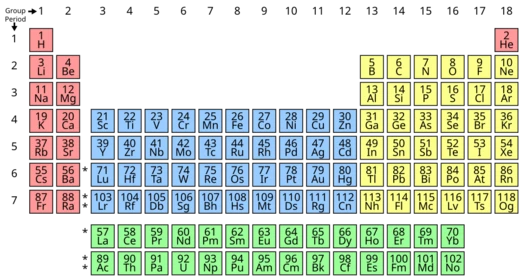
Zirconium is a chemical element with symbol Zr and atomic number 40. It is solid at room temperature, ductile, malleable and corrosion-resistant. The name zirconium is derived from the mineral zircon, the most important source of zirconium, which is related to the Persian word zargun, meaning 'gold-like' or 'as gold.'
- symbol
- Zr
- atomic_number
- 40
- electronegativity
- 1.33 (Pauling scale)
Lore & Background
It is a lustrous, greyish-white, soft, ductile, and malleable metal that is solid at room temperature, though it becomes hard and brittle at lesser purities. In powder form, zirconium is highly flammable, but the solid form is much less prone to ignition. It is highly resistant to corrosion by alkalis, acids, salt water, and other agents, but dissolves in hydrochloric and sulfuric acid, especially when fluorine is present. Alloys with zinc are magnetic at less than 35 K. Naturally occurring zirconium consists of five isotopes: 90Zr, 91Zr, 92Zr, 94Zr, and 96Zr. The first four are stable, while 96Zr decays with a half-life of 2.34×10^19 years by double beta emission. The most common isotope is 90Zr, making up 51.45% of all zirconium, and the least common is 96Zr at 2.80%. Artificial radioisotopes range from 77Zr to 114Zr, with 13 nuclear isomers. The most stable artificial isotope is 93Zr, a long-lived fission product with a half-life of 1.61 million years. It is not found as a native metal due to its instability with water. The principal commercial source is zircon (ZrSiO4), found primarily in Australia, Brazil, India, Russia, South Africa, and the United States.
Reader's Guide
Zirconium is significant primarily for its use in nuclear reactors, where its alloys are used to clad nuclear fuel rods due to low neutron absorption and strong corrosion resistance. It is also used in space vehicles and turbine blades where high heat resistance is necessary. Additionally, zirconium finds applications in flashbulbs, biomedical implants such as dental prosthetics, deodorant, and water purification systems. The metal and its alloys are mainly used as a refractory and opacifier. Zirconium compounds have no known biological role, though the element is widely distributed in nature and appears in small quantities in biological systems without adverse effects. There is no indication of zirconium as a carcinogen. The main hazards are flammability in powder form and eye irritation. Most zirconium metal is produced by the Kroll process, reducing zirconium(IV) chloride with magnesium. Zirconium's unique properties, including its corrosion resistance and low neutron absorption, make it indispensable in specialized industrial and technological contexts.
Did You Know?
- Zirconium is named after the mineral zircon, which comes from the Persian word 'zargun' meaning 'gold-like' or 'as gold.'
- Zirconium has the fourth lowest electronegativity among d-block elements with known values, after hafnium, yttrium, and lutetium.
- The isotope 96Zr decays with a half-life of 2.34×10^19 years by double beta emission.
- Zirconium is a by-product of mining and processing titanium minerals ilmenite and rutile, as well as tin mining.
More in Chemical Elements 1-16
Spotted an error? Know more?
This is a living reference — every entry is fact-audited, and reader corrections feed straight into our audit queue. Suggest an edit · See this site's audit record